
MyCaseLabo: 97 Kiosks in One Year
How MyCaseLabo launched nationwide in June 2025 and reached 97 kiosks in about a year.

I'm the COO of GOBEAR. We help entrepreneurs, mall operators, 3C mobile stores, event venues, and campus retailers tap into high-margin, low-maintenance vending models.
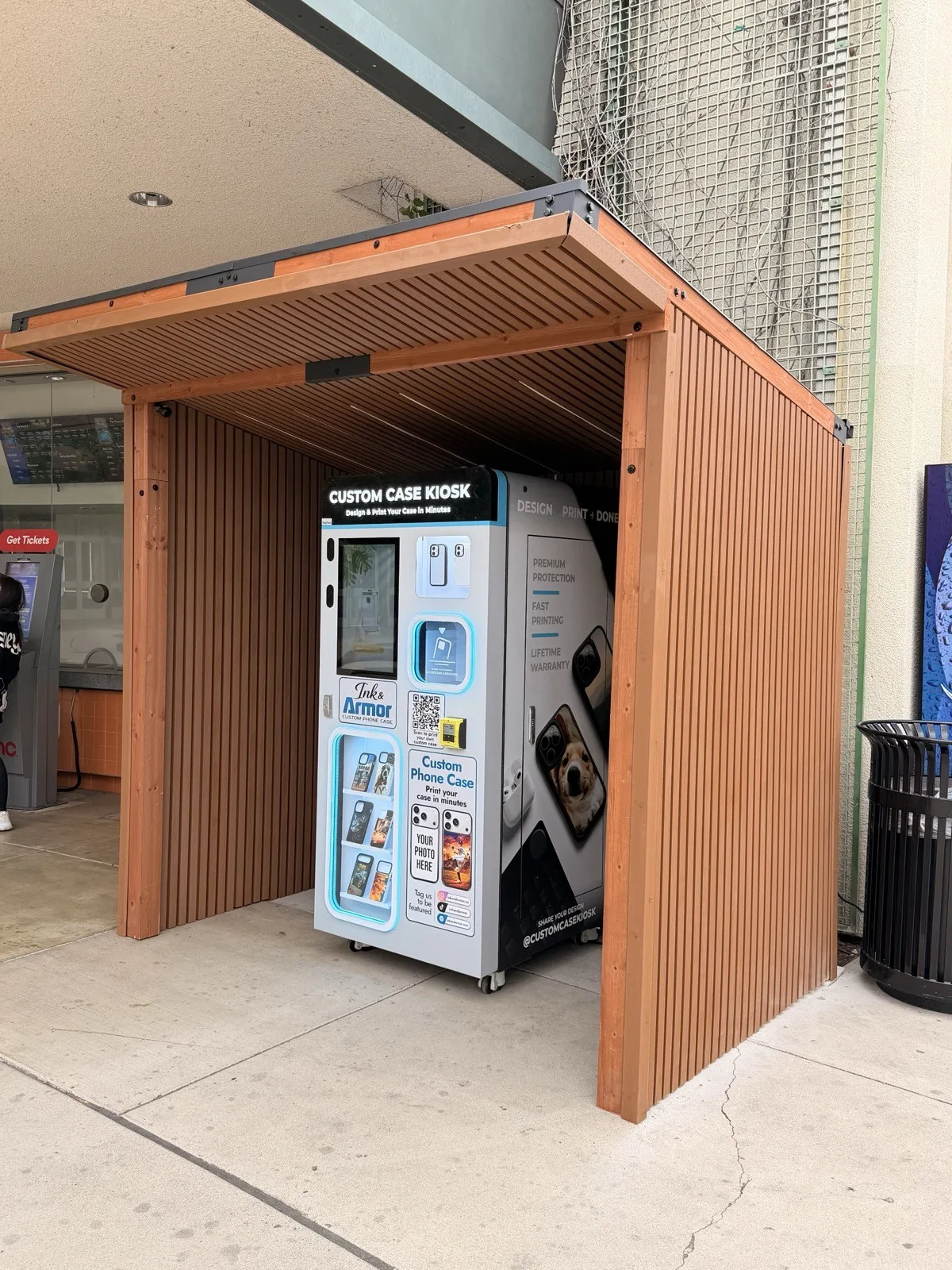
Magnetic phone cases add another product option to a phone case vending business. Their value comes from accessory compatibility, case quality and personalization. For operators, the purchasing decision involves more than a higher selling price: compatible blanks, printing performance, supply costs and local demand all need checking.
MagSafe and Qi2 help explain the compatibility side of that decision. Examples from our case studies show how operators price magnetic cases, while the sections below examine machine compatibility, blank-case requirements and the costs behind a pricing strategy.
If you only have two minutes, here is the short version:
The premium: KURKIS in Lithuania sells clear cases at €12.99–14.99 and its Premium Black MagSafe at €18.99; 27%-46% more, from the same kiosk.
The planning band: across operators with published ranges, the premium magnetic tier sits 30–45% above the entry case.
Two pricing strategies both work: MyCaseLabo ships MagSafe-ready cases as standard; KURKIS prices magnetic as a premium tier over an entry clear anchor.
Machine requirement: the magnet ring sits under the print surface, so magnetic cases need dedicated handling; not every UV printer can do them. Ask for a live magnetic-case print before buying.
The Qi2 shift: magnetic alignment is becoming the industry standard beyond Apple, which turns magnetic SKUs from an iPhone product into a catalog-wide decision.
The retail gap: big-box accessory aisles lag on magnetic cases for current flagships; a print-on-demand kiosk covers new models the day templates ship.
MagSafe is Apple's magnetic accessory system; the ring of magnets inside the iPhone, introduced with the iPhone 12 in 2020, that snaps chargers, wallets and mounts into place. It turned the case from pure protection into a component: a MagSafe case must carry a matching magnet array so the charger still snaps through it.
Qi2 is the industry standard that grew out of it. The Wireless Power Consortium built magnetic alignment into the open Qi charging standard, which means magnetized accessories and cases are spreading beyond Apple to flagship phones of other brands. For a kiosk operator, the practical reading is simple: magnetic cases are no longer an Apple-only SKU; they are becoming a catalog-wide assumption.
The clearest published example comes from KURKIS by You in Lithuania. Its kiosks print a custom case in 2–3 minutes, and the price ladder reads: clear cases at €12.99–14.99, Premium Black MagSafe at €18.99. Same machine, same print time, same restock run; 46% more revenue per sale.
The pattern generalizes. Across the operators in our case studies with published ranges, the structure repeats: an entry clear case, a premium magnetic tier 30–45% above it, and films priced near parity with cases. A representative three-tier build for a Western market; clear at €12.99, custom design at €15.99, MagSafe at €18.99; is copied almost directly from the KURKIS playbook, and the same structure starts at $20 for the premium tier in the U.S. and Japan. The full country-by-country table is in our global pricing benchmark.
Compare what moves and what does not when a customer upgrades from a standard to a magnetic case:
|
What changes |
How much |
|
Price charged |
+46% at KURKIS; 30–45% planning band |
|
Print time |
unchanged; same 2–3 minute cycle |
|
Machine footprint |
unchanged |
|
Restock labor |
unchanged; same refill trip |
|
Blank cost |
higher, but nowhere near the price gap |
That last line is the whole business case. The magnetic blank costs more than a standard blank (GOBEAR's own K77-M2 premium case is positioned explicitly as the "high-margin upgrade") but the premium is created by adding a product tier, not by the consumable eating it. On the operator side, the advice from our ROI analysis is blunt: the magnetic premium is the cheapest margin you will ever add, so price magnetic as a separate tier rather than folding it into the base price.
The customer side cooperates. Magnetic cases sell into the Apple ecosystem, where accessory spending is habitual and a premium finish is expected; the K77-M2 pairs its N52 magnet array with a skin-touch finish and interchangeable lens frames precisely because the buyer of a magnetic case is buying the premium tier of the whole experience.

Here is the part buyers miss: a magnet ring under the print surface changes the case as a physical object. The print area changes around the ring, the surface layers differ, and automated feeding has to handle the variant. A UV printer that prints beautifully on flat clear cases has not thereby proven it can print magnetic cases.
So "MagSafe ready" is a machine capability, not a case SKU. Concretely:
The machine's supported case list must include magnetic variants; GOBEAR's K77-M2 MagSafe case runs N52 magnets for secure wireless charging, in a hybrid PC-back, TPU-side construction, compliant with EU RoHS & REACH.
The design software must lay out around the ring, or your best artwork lands partly on magnets.
The automated case handling must feed and print the variant without jams; this is exactly what you verify in a pre-shipment acceptance test: run a live magnetic-case print, not just a standard one. Our UV printer buying guide puts model coverage and MagSafe/Qi2 handling at Step 4 of the purchase decision for this reason.
If MagSafe were staying Apple-only, magnetic support would still pay for itself on iPhone volume. But the direction of travel is wider: with Qi2, magnetic alignment is part of the open standard, and flagship phones beyond Apple keep adding magnetic arrays.
For a print-on-demand operator this shift is good news twice over. First, the magnetic tier stops being an iPhone-only upsell and becomes a cross-brand catalog decision; MyCaseLabo already prints MagSafe-ready cases for iPhone and Google Pixel. Second, the obsolescence problem that plagues pre-loaded vending barely exists here: when a new flagship launches, a print kiosk needs template updates delivered over the air, not new physical stock. Balaji Brands' 60-kiosk U.S. fleet runs exactly that way; remote dashboard, OTA updates, MagSafe and Qi2 cases in 3–5 minutes.
There is also a scarcity angle that only print-on-demand machines can use. When a new flagship ships, magnetic cases for it are exactly the product big-box accessory aisles do not have yet; the retail shelf lags the launch by months. A kiosk that prints a magnetic case for this month's phone, on the spot, is not competing with the accessory aisle; it is selling what the aisle cannot stock.
Balaji Brands built its U.S. expansion on this cycle. Its kiosks sit in Boost Mobile stores, where the customer is standing there precisely because they just got (or are about to get) a new phone. A custom magnetic case printed for that exact model in under five minutes is the most relevant upsell in the building. Within one year of launching at CES 2026, the fleet reached 60 kiosks across 25 states.
The case studies show both strategies working:
Tier (KURKIS): entry clear case anchors the price ladder, custom design sits mid-tier, MagSafe tops it at +46%. Recommended start; the anchor makes the premium legible, and you learn what your market actually pays before committing.
Default (MyCaseLabo): MagSafe-ready as standard across the catalog. This suits a premium market positioning (in Japan it pairs with a ¥2,980 from-price) and removes the tier decision from the customer's path.
One discipline from the operator data: raise prices when you add a tier, not when costs creep. The KURKIS 46% premium was created by introducing a magnetic tier, not by re-pricing the base case; existing customers never saw the entry price move.
Before you buy or upgrade a machine, get written answers to:
Can it print magnetic cases today? Require a live MagSafe print in the acceptance test; on your blank, at your venue's volume.
Is the magnetic blank supply secured and priced? The consumable relationship outlives the machine; price the blanks before the hardware.
Does the design library lay out around the magnet ring, or does artwork land on magnets?
How do new models arrive? OTA template updates are the only answer that survives a September launch cycle; and the same pipeline should cover magnetic Android models as Qi2 spreads.
What is your tier plan? Entry clear, custom mid-tier, magnetic on top at +30–45%; revisit after you have four weeks of sales data.
The machine is where the magnetic premium lives. GOBEAR’s K77-M2 case uses N52 magnets and prints on demand, so a MagSafe tier costs no extra hardware, only a SKU and a price point. The kiosk software lays out around the magnet ring so the magnets never touch the print head.
MagSafe is Apple's magnetic accessory system, introduced with the iPhone 12 in 2020. Qi2 is the Wireless Power Consortium's industry standard that brings magnetic alignment to all brands. For an operator, MagSafe is the Apple SKU; Qi2 is why magnetic cases are becoming a catalog-wide assumption.
Yes; on machines designed for it. The magnet ring under the print surface changes the case geometry and layout, so magnetic support is a machine capability, not just a case SKU. GOBEAR's K77-M2 magnetic cases (N52 magnets) print on demand on the same kiosks; always verify with a live magnetic print before buying.
The benchmark is 46%: KURKIS sells clear cases at €12.99–14.99 and Premium Black MagSafe at €18.99. Across operators with published ranges, the magnetic tier sits 30–45% above the entry case, with $20 anchoring the premium tier in the U.S. and Japan.
Both strategies appear in the operator group. MyCaseLabo ships MagSafe-ready cases as standard with a premium market position; KURKIS prices magnetic as a top tier over an entry clear anchor. Starting with a tier is safer; the anchor price makes the premium legible and you learn what your market pays before committing.
Increasingly, yes. Qi2 has moved magnetic alignment into the open standard, and flagship Android phones keep adding magnetic arrays. MyCaseLabo already prints MagSafe-ready cases for Google Pixel; cover magnetic Android models as your supplier's template library adds them over the air.
Want the magnetic tier configured for your market? Tell us which phone brands dominate your locations and we will set up the machine, magnetic blank supply and a tier structure that fits; the same hardware printing MagSafe and Qi2 cases across the 10 case studies on this site.
Share your business vision with us. Our automated retail experts will craft a tailored strategy and a comprehensive profitability report to unlock your next revenue stream.