Phone Case Kiosks in Airports: What 3 Airports Taught Us
Three airport phone case kiosk deployments and five lessons on terminal matching, pricing and partnerships.

I'm the COO of GOBEAR. We help entrepreneurs, mall operators, 3C mobile stores, event venues, and campus retailers tap into high-margin, low-maintenance vending models.
Most "phone case vending machine ROI" articles recycle the same hypothetical math: pick a price, pick a sales volume, promise payback in weeks. This article is different. Every number below comes from 10 operators running GOBEAR custom phone case and screen protector kiosks in Japan, Australia, Malaysia, Thailand, Poland, Lithuania, Estonia and the United States; kiosks directly operated by nine of these brands, plus a global brand with 5,000+ installations across 40+ countries.
You will see what customers actually pay in eight markets, what operators actually spend to launch, and the payback periods they actually report. Where a figure is a company's own claim rather than an audited number, we say so.
If you only have two minutes, here is the short version, with sources in this article:
What customers pay: the equivalent of $11–$21 per custom case across all eight markets, with $20 anchoring both Tokyo and the U.S.
Unit economics: consumables run $3–$4 per case, so a $20 sale leaves roughly $16–$17 gross margin before location costs.
Startup cost: roughly $8,000–$15,000 all-in for a first machine (machine, shipping, first consumables). In Europe, a 3–5 machine franchise package sells for €40,000–€60,000. In Poland, you can lease from 5,000 zł (≈$1,300) per month, rent-to-own.
Payback: an official Polish B2B model says 2.5–5 months at 15 cases per day. Payback varies by location and volume, so treat these as planning benchmarks, not guarantees. Plan conservatively and assume 6–18 months.
Revenue benchmark: $1,000–$3,000 per machine per month is the realistic operating range for well-placed kiosks.
These are real, visitable deployments; every one has a full case study on this site. Together they cover airports, metro stations, flagship malls, electronics chains and street-level retail on three continents.
|
Operator |
Country |
Kiosks |
Launched |
Street price (local) |
≈USD |
|
🇯🇵 Japan |
97 |
Jun 2025 |
from ¥2,980 |
~$20 |
|
|
🇯🇵 Japan |
86 |
Aug 2024 |
from ¥2,980 |
~$20 |
|
|
🇺🇸 USA |
50 |
Jan 2026 (CES) |
set by location |
; |
|
|
🇹🇭 Thailand |
20 |
2026 |
from ฿490 |
~$14 |
|
|
🇦🇺 Australia |
18 |
2022 |
A$19–29 |
$13–19 |
|
|
🇲🇾 Malaysia |
12+ |
; |
RM50 (film RM45–50) |
~$11 |
|
|
🇵🇱 Poland |
8 |
; |
leasing model |
; |
|
|
🇪🇪 Estonia |
3 |
2024 |
from €12.90 |
~$14 |
|
|
🇱🇹 Lithuania |
2+ |
2025 |
€12.99–18.99 |
$14–20 |
|
|
🇺🇸 USA |
5,000+ global (300+ US) |
; |
$20 |
$20 |
A few things stand out immediately. The two Japanese brands alone run 183 kiosks; proof that demand supports city-level density, not just one machine per town. The U.S. has both ends of the spectrum: a year-old startup at 50 kiosks and a distributor network claiming 5,000+ installations. And the entry ticket is lower than most people assume: two European operators started with just 2–3 machines each.
You can read each operator's full story in our customer case studies.
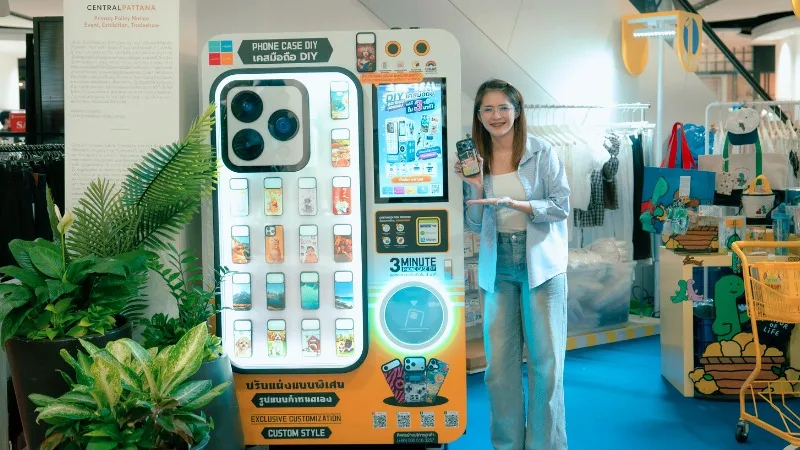
Strip out the currencies and a clear global price band emerges: the equivalent of roughly $11–$21 per custom-printed case, with most markets clustered at $13–$20.
|
Market |
Case price |
Screen film price |
Where it sells |
|
Japan (MyCaseLabo / FilmLabo) |
¥2,980 (~$20) |
¥2,980 (~$20) |
Don Quijote, Bic Camera, EDION, Haneda T3, Kansai T2, Tokyo Metro |
|
USA (Magics Group) |
$20 |
; |
malls, theme parks, stadiums |
|
USA (Custom Case Kiosk) |
set by location |
; |
Boost Mobile stores, SCHEELS, 21 states |
|
Australia (CubeLab) |
A$19–29 ($13–19) |
A$19–29 |
The Glen, Erina Fair, Northland |
|
Lithuania (KURKIS) |
€12.99–18.99 ($14–20) |
; |
Akropolis Kaunas, Vilnius Outlet |
|
Estonia (PrintCase) |
from €12.90 (~$14) |
; |
flagship malls of Tallinn, Tartu, Parnu |
|
Malaysia (CASED) |
RM50 (~$11) |
RM45–50 (~$10–11) |
9 Klang Valley malls, klia2 airport |
|
Thailand (VEGER) |
from ฿490 (~$14) |
; |
Central Ladprao, WHA Tower, 20 locations |
Three pricing patterns are worth copying:
KURKIS prices clear cases at €12.99–14.99 and its Premium Black MagSafe at €18.99; a 46% premium for the magnetized version. MyCaseLabo's cases are MagSafe-ready as standard, and Balaji Brands' U.S. kiosks print MagSafe and Qi2 cases. If your machine supports magnetic cases, price them as a separate tier, not an add-on.
FilmLabo built Japan's first fully-automatic screen protector kiosk business; 86 machines in 24+ prefectures, applying 9H glass in about 2 minutes. CubeLab runs 14 film kiosks alongside 4 case printers. In Malaysia, CASED sells films at RM45–50, nearly the price of a case. Dual-product operators effectively double their addressable sales per location.
klia2 in Kuala Lumpur, Haneda T3 and Kansai T2 in Japan, and the biggest malls in Tallinn, Tartu and Kaunas; no operator in this group discounts to win foot traffic. Captive, high-dwell-time locations support full price.
There is no single sticker price for entry, because the 10 operators chose three different structures. Machine specifications (capacity, payment systems, printing engine) drive the final quote, so treat these as real-world reference points rather than a price list; then get a configured quotation for your market.
Our complete startup guide puts an all-in first-machine budget at roughly $8,000–$15,000, covering the machine, shipping, installation and first consumables. This is the path of the two Japanese brands and the two U.S. operators, who then scaled by reinvesting machine profits.
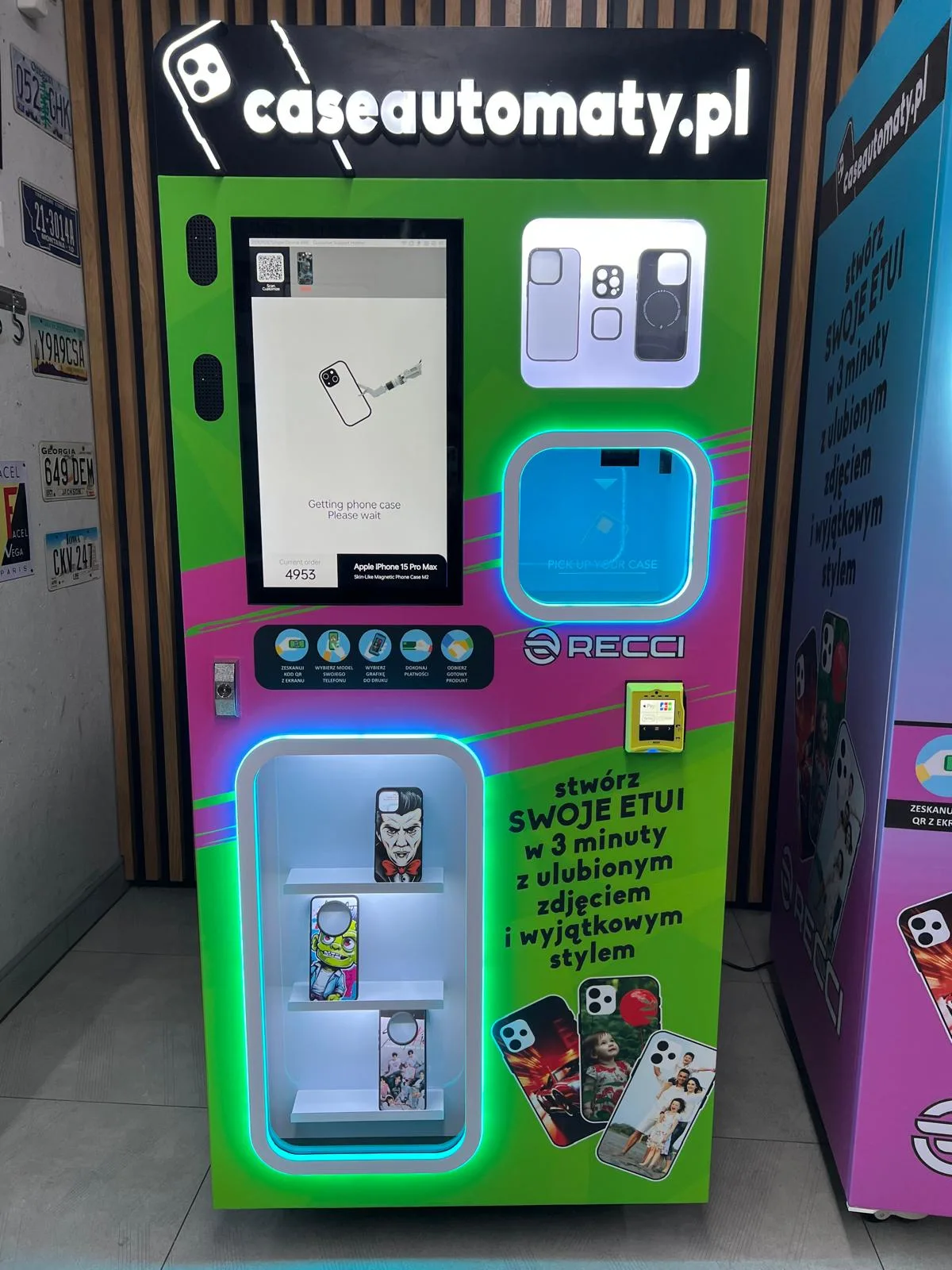
CaseAutomaty, GOBEAR's official landing partner in Poland, leases machines to local operators from 5,000 zł (≈$1,300) per month on rent-to-own terms; and bundles marketing support, accounting services (business registration, VAT/PIT) and 24/7 remote technical support. VEGER in Thailand likewise offers its kiosks for rent or sale. Leasing converts a capital decision into an operating expense and preserves cash for location deposits.
Price your own kiosk rollout
Get a build-to-order quote for the GOBEAR machines behind these operators.
Get a QuoteMB "Vending Solutions" in Lithuania sells KURKIS by You franchise packages at €40,000–€60,000, covering 3–5 machines, training and starting stock; implying a fully-loaded cost of roughly €8,000–€20,000 per machine once training and inventory are included. This path trades a higher ticket for a supported entry, and it is how the brand is building a Baltic-wide network on top of its own two flagship-mall kiosks.
The operating cost structure is unusually lean, which is what makes the model attractive:
|
Cost item |
Typical level |
Notes |
|
Consumables (blank case, ink, film) |
$3–$4 per case |
your largest variable cost |
|
Location rent / revenue share |
15–25% of gross sales |
revenue-share deals dominate in malls |
|
Electricity |
negligible |
modern kiosks draw little power |
|
Payment processing |
standard card rates |
fully cashless across the top operators |
|
Labor |
near zero |
restocking every 1–2 weeks; remote monitoring and OTA updates |
Work the math on a representative $20 sale: roughly $3.50 in consumables and a 15% venue share (about $3) leaves a net contribution of $13–14 per case. At $16 gross margin per case and typical volumes, the business clears its location costs quickly; which is exactly what the payback figures below reflect.
This is where claimed figures need labeling, so here are all three side by side:
|
Source |
Payback figure |
Basis |
|
CaseAutomaty (Poland), official B2B materials |
2.5–5 months |
15 cases sold per day |
For planning, use a sensitivity table instead of a single promise. Assume a $10,000 all-in first machine, $20 average selling price, and $13.5 net contribution per case after consumables and a 15% venue share:
|
Cases per day |
Cases per month |
Monthly net contribution |
Months to recover $10,000 |
|
5 |
150 |
~$2,025 |
~5 |
|
10 |
300 |
~$4,050 |
~2.5 |
|
15 |
450 |
~$6,075 |
~1.6 |
Note how well this lines up with the CaseAutomaty model: at 15 cases per day, payback lands between roughly 2.5 and 5 months depending on the machine investment (on a higher investment or weaker pricing). Our complete ROI guide uses a deliberately conservative 6–18 month planning window so that location mistakes don't sink the business; treat anything faster as upside.
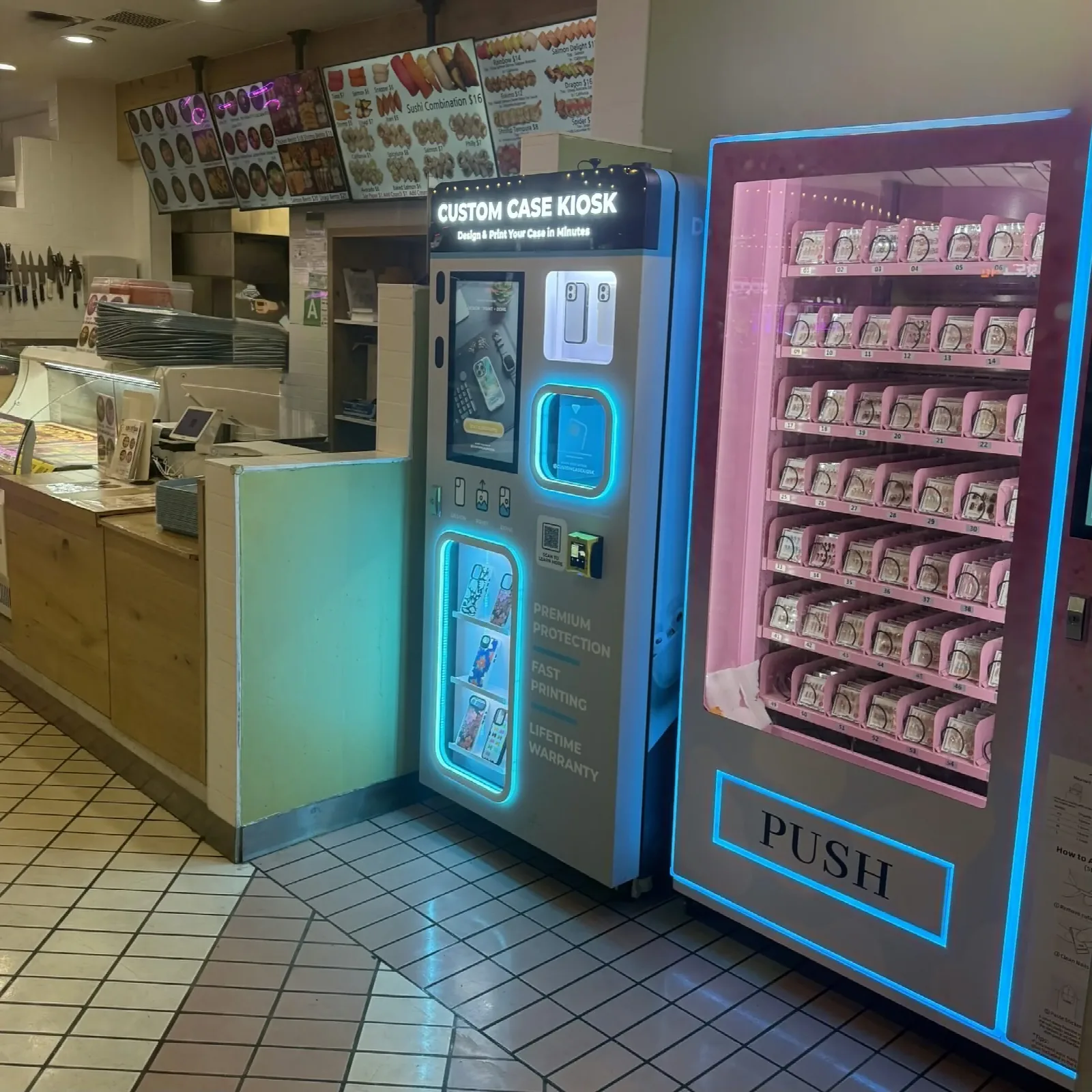
Across the industry and this operator group, $1,000–$3,000 per machine per month is the realistic operating band. Location type moves the number more than any other variable, as we detailed in our sales strategy guide:
|
Location type |
Estimated monthly revenue per machine |
|
Airports / transit hubs |
$2,500–$3,500 |
|
Shopping malls |
$2,000–$3,000 |
|
University campuses |
$1,500–$2,500 |
|
Tourist attractions |
$2,000–$3,000 |
|
Entertainment venues |
$1,800–$2,800 |
The operator portfolios back these bands up: airports anchor the Japanese, Malaysian and Baltic deployments; national retail chains (Don Quijote, Bic Camera, Boost Mobile, SCHEELS) carry the high-volume sites.
PrintCase Express put exactly one kiosk in the flagship mall of each of Estonia's three largest cities, then added an online designer with one-day production and free Baltic-wide parcel-locker delivery. KURKIS by You runs two flagship-mall kiosks and sells franchises on top. Three machines, deliberately placed, beat ten scattered ones.
CaseAutomaty runs 8 machines across 8 Polish cities; and makes the market itself the business by leasing machines to other operators with marketing, accounting and 24/7 support bundled in. If you know your local regulations and retail market, that knowledge is sellable alongside the machines.
MyCaseLabo reached 97 machines in about a year by partnering with national retail chains rather than negotiating site by site. Balaji Brands launched at CES in January 2026 and hit 50 kiosks across 21 states within a year, onboarding retail partners like Boost Mobile and SCHEELS. VEGER converted a Disney-licensed accessories factory into a 20-kiosk brand with machines offered for rent or sale. Distribution partnerships (not walk-in traffic alone) are what get you from 3 machines to 50.
Rank-ordered by observed impact across these 10 operators:
Location first. Every high-price, high-volume example in this article sits in an airport, a flagship mall or a national retail chain.
Price MagSafe as a tier. The 30–45% premium is the cheapest margin you will ever add.
Pair case and film machines. CubeLab's 14+4 split and FilmLabo's 86 film-only kiosks show both directions of the same strategy.
Sign chains, not spots. One negotiation with a retail chain produced 20+ locations for several operators in this group.
Keep the machine selling. Remote dashboards and OTA updates (standard on current GOBEAR hardware) keep uptime (and revenue) where it should be.
What ties these operators together is the hardware. GOBEAR phone case run the same EPSON UV printheads, hold 770 blanks in the K77 chassis and up to 1,140 in the K114, and report to the same remote dashboard with over-the-air updates. Buying the machine means buying into the platform these operators used to go from one kiosk to a fleet.
Plan for roughly $8,000–$15,000 all-in for one machine including shipping and first consumables. In Europe, supported 3–5 machine packages run €40,000–€60,000. In Poland, rent-to-own leasing starts at 5,000 zł (≈$1,300) per month. Exact machine pricing depends on configuration, so request a quotation for your market.
With consumables at $3–$4 per case and typical selling prices of $13–$20, gross margin per case is $11–$17. After a 15–25% venue share, well-placed machines generate $1,000–$3,000 per month.
Operator figures: 2.5–5 months at 15 cases per day (official Polish B2B model). Payback varies by location and volume A conservative plan should assume 6–18 months.
The proven global band is $11–$21 equivalent, with $20 anchoring both Japan and the U.S. Price MagSafe and Qi2 versions 30–45% above standard cases, and hold full price in airports and flagship malls.
Yes. PrintCase Express and KURKIS by You show that a small rollout is possible. Starting with 2–3 machines allows operators to test locations, track demand and refine their stock mix before expanding. Profitability still requires enough sales to cover equipment and operating costs.
Share your business vision with us. Our automated retail experts will craft a tailored strategy and a comprehensive profitability report to unlock your next revenue stream.