MyCaseLabo: 97 Kiosks in One Year
How MyCaseLabo launched nationwide in June 2025 and reached 97 kiosks in about a year.

I'm the COO of GOBEAR. We help entrepreneurs, mall operators, 3C mobile stores, event venues, and campus retailers tap into high-margin, low-maintenance vending models.
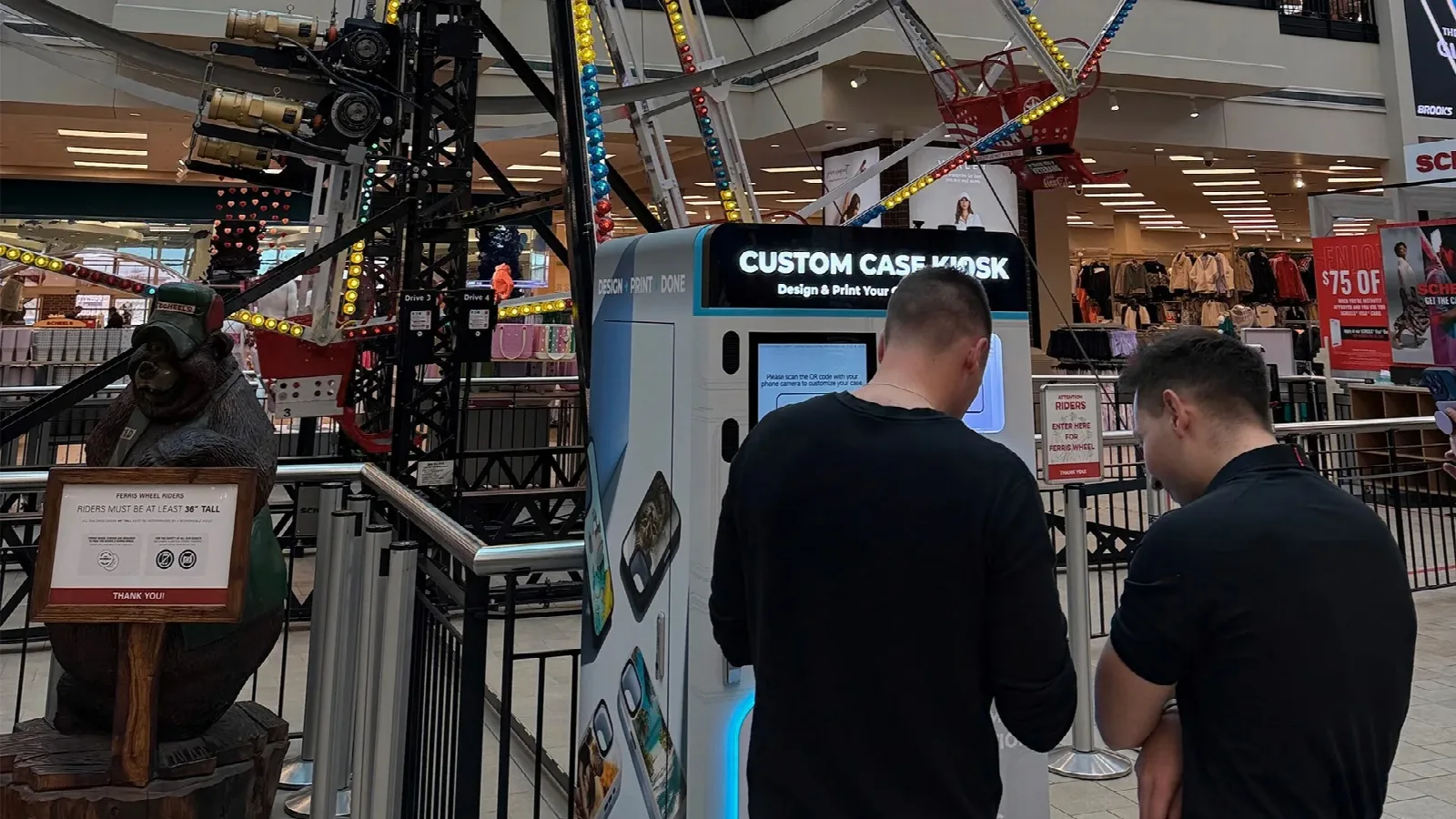
In January 2026, Balaji Brands of Chino, California introduced Custom Case Kiosk during CES week in Las Vegas. Its self-service machines print personalized designs on MagSafe and Qi2 cases in minutes. By October 2026, the brand reported 60 kiosks across 25 U.S. states. The product also won Best New Product at
International Bowl Expo 2026.
The kiosks run on GOBEAR phone case vending hardware. The rollout offers practical lessons in retail partnerships, location planning and remote fleet management for operators considering their own expansion.
Custom Case Kiosk is a brand of Balaji Brands, founded in 2006 and headquartered in Chino, California. Before a single kiosk shipped, the company had spent nineteen years in U.S. consumer retail and was already present in more than 20,000 retail doors nationwide.
That mattered twice over. First, it meant the machines entered the market with an existing distribution network, not a cold start. Second, it meant Balaji knew exactly which retail formats generate impulse purchases; knowledge that shows in every location the brand picked. The company's partners today include Boost Mobile, the wireless carrier whose stores draw a steady stream of handset upgraders, and SCHEELS, the sporting goods superstore chain.
The lesson is uncomfortable but useful: Balaji's first year looks like a startup sprint, but it ran on a nineteen-year head start. If you do not have that network yet, the kiosks themselves are how you start building it; two to three well-placed machines, then chains, as our scaling stories comparison lays out.
A kiosk business needs locations, and locations come from people who control retail space. That is precisely who walks CES: retail-chain buyers, distributors, franchise operators and venue owners, all in one building, all looking for the next thing worth shelf space.
Launching there let Custom Case Kiosk do three things at once:
Put the machine in front of qualified buyers, printing real MagSafe and Qi2 cases on the spot in 3–5 minutes; the demo closes the deal by itself.
Anchor the brand's credibility from day one ("as seen at CES") before it had a single public location.
Start the year's sales pipeline with leads who had budget and authority, rather than early-adopter curiosity.
Trade shows remain the highest-density buyer environments in this industry; we exhibit for exactly this reason, and our CES present page lists where the machines have appeared.
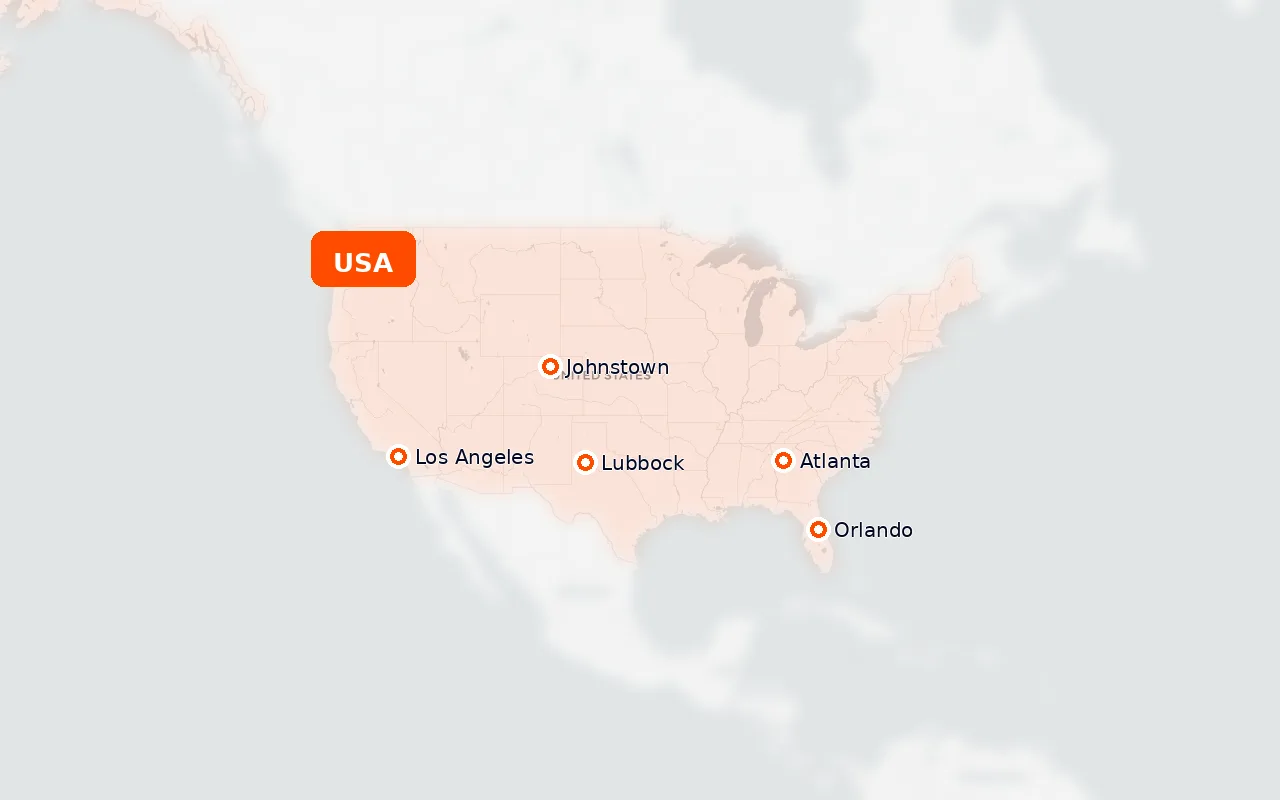
Look at the deployment map and the geography tells the story: Koreatown in Los Angeles and Orange, CA; SCHEELS Johnstown in Colorado; Albuquerque, NM; Dallas and El Paso, TX; Fargo, ND; Humacao, Puerto Rico. Four time zones, dense metros and small cities alike, continental U.S. plus an island territory; with six more states announced.
Three deployment choices stand out:
The list leans on named destinations (a SCHEELS flagship, Boost Mobile stores, regional entertainment centers) rather than random mall corridors. Anchor locations deliver their own foot traffic, so every kiosk starts with an audience instead of waiting to be discovered.
A Boost Mobile customer is standing in the store specifically because they just got, or are about to get, a new phone. A machine that prints a custom MagSafe case for that exact model in under five minutes is the most relevant upsell in the building. Balaji's carrier partnership plugged the kiosks directly into the phone-upgrade cycle.
Custom Case Kiosk does not publish a single national price; each site sets its own. That reflects retail discipline learned over two decades: a kiosk next to a SCHEELS checkout in Colorado and one in Koreatown LA serve different audiences with different willingness to pay. (For how the wider market prices, see our global pricing benchmark; U.S. operators anchor around $20.)
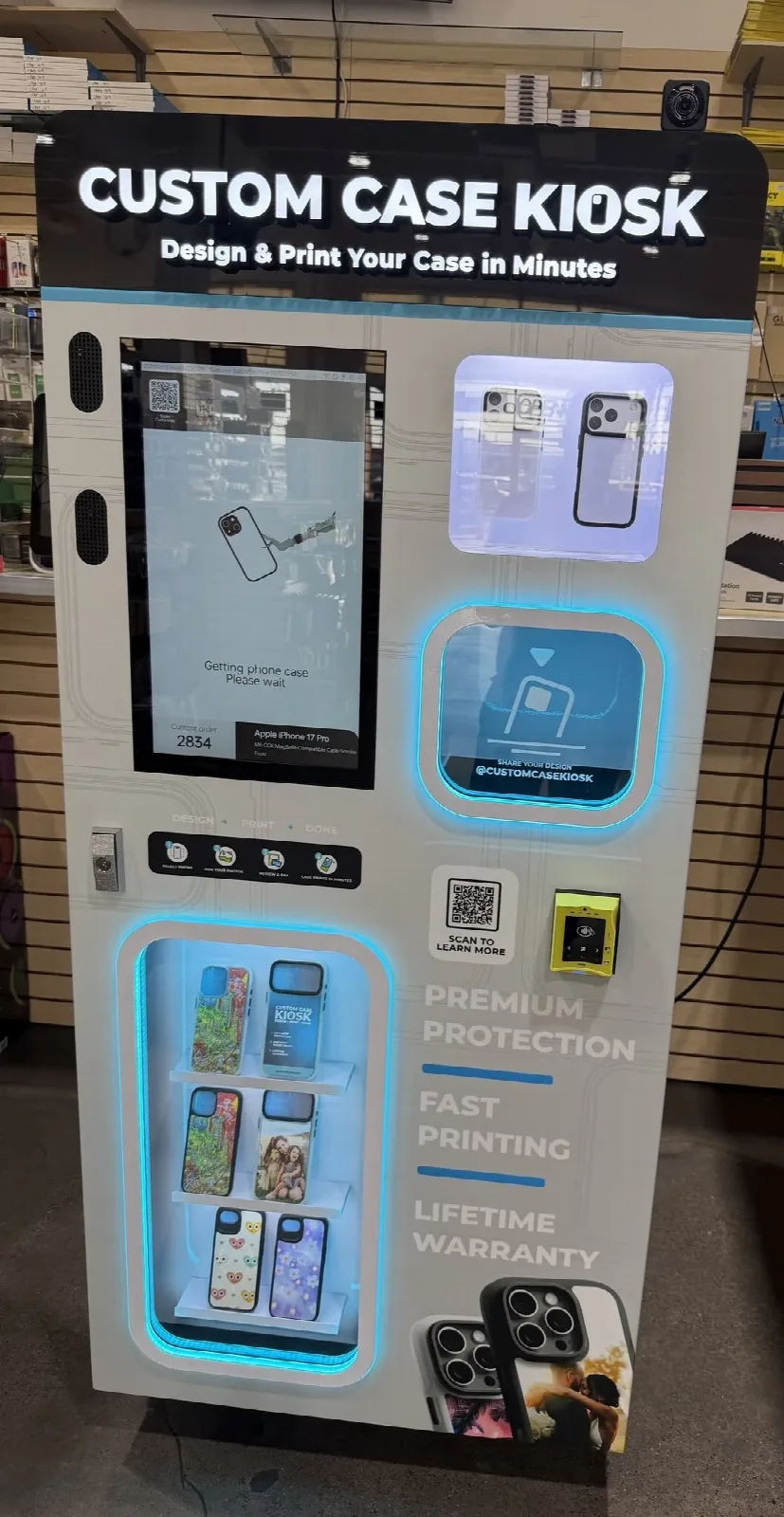
The unglamorous enabler of the whole rollout: every kiosk is managed through a remote dashboard with over-the-air (OTA) updates.
Fifty machines in twenty-one states cannot be run as a route business; no driving schedule covers Los Angeles to San Juan. Remote fleet management turns the geography from a liability into a non-issue: sales, stock levels and machine health are visible from one screen, software updates ship over the air, and humans only visit when restocking (a 1–2 week cycle) or maintenance actually requires hands on site. It is the same operating model that lets an eight-machine operator in Poland support customers 24/7, and it is why a 25-state network can exist at all.

Scale from one state to 25
Talk to GOBEAR about a kiosk that prints MagSafe and Qi2 cases.
Get a QuoteMagSafe and Qi2 printing covers current flagship iPhone models; the cases customers cannot yet find in big-box accessory aisles.
3–5 minute print time keeps the experience inside the impulse-purchase window.
The industry noticed: Best New Product at the 2026 International Bowl Expo, awarded within the first year of operation.
Strip the story down and three assets did the work:
1. A distribution network built over 19 years and 20,000+ retail doors. The machines had somewhere to go.
2. A launch venue packed with the exact buyers needed. CES compressed a year of meetings into a week.
3. Hardware designed for remote operation. The fleet scales without the payroll scaling.
Notice what is not on the list: a giant advertising budget, a franchising army, or a thousand trial locations. The rollout was fast because the groundwork was old and the machines were ready.
You are probably not launching with 20,000 retail doors behind you; almost nobody is. But the skeleton of the story transfers at any scale:
Launch where your buyers already gather. If not CES, then the regional trade show, the mall-operator open house, the franchise expo. Density beats outreach.
Sign anchors, not spots. One Boost Mobile or SCHEELS-style partner is worth a dozen unaffiliated corridors.
Buy machines you can run remotely from day one. It is the difference between a business that fits your life and a second job as a driver.
Price by location. Your costs are local; your prices should be too.
If you want to see the machines in person before you commit to a rollout of your own, we exhibit worldwide; check the exhibition schedule, including our next CES appearance, and book a meeting.
For a buyer, this story answers a practical question: can one person run a 60-kiosk fleet? The GOBEAR kiosk remote dashboard, over-the-air updates and 2K-camera diagnostics are what make a 21-state rollout operable without a technician per machine. The printing engine and case magazine are the same units sold to a single-location operator.
Balaji Brands is a consumer products company founded in 2006 and based in Chino, California, present in more than 20,000 U.S. retail doors. Custom Case Kiosk is its self-service custom phone case brand, launched at CES in January 2026.
Fifty kiosks across 25 U.S. states as of one year after launch, with six more states announced. Locations include Koreatown LA, Orange CA, SCHEELS Johnstown CO, Albuquerque NM, Dallas TX, El Paso TX, Fargo ND and Humacao PR.
Every kiosk connects to a remote dashboard with over-the-air updates. Sales, inventory and machine health are monitored centrally, software ships remotely, and site visits are limited to restocking and maintenance.
Custom MagSafe and Qi2 phone cases, printed in 3–5 minutes; covering current flagship phones with the magnetic cases mainstream accessory aisles often lack. Pricing is set by each location.
Yes. GOBEAR exhibits at major events including CES — the same stage where Custom Case Kiosk launched. The exhibition page lists upcoming shows and meeting booking.
Share your business vision with us. Our automated retail experts will craft a tailored strategy and a comprehensive profitability report to unlock your next revenue stream.