Is Phone Case Printing Profitable in USA
Phone Case Printing Profitable USA: Discover high margins & rapid ROI for B2B ventures. Explore scalable operations and ...

I'm the COO of GOBEAR. We help entrepreneurs, mall operators, 3C mobile stores, event venues, and campus retailers tap into high-margin, low-maintenance vending models.
Public environments have become the default space for digital activity, where screens are constantly exposed outside controlled settings. As mobile and hybrid work patterns expand, sensitive information is increasingly viewed in shared physical spaces rather than private environments.
This shift creates persistent screen exposure as a structural condition of modern digital environments. These conditions have made privacy protection a recurring requirement in modern digital behavior.
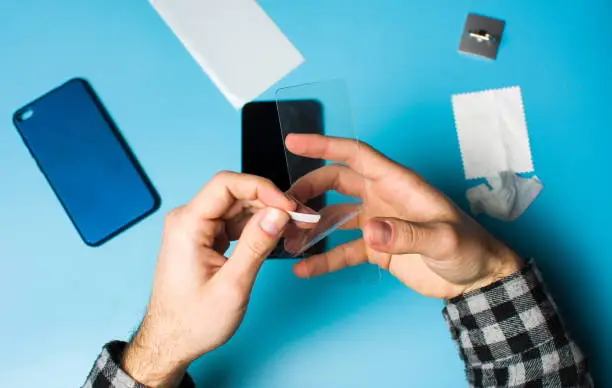
Privacy screen protectors are designed to control how screens are viewed from different angles without changing the displayed content.
Public environments naturally create conditions where screen content can be unintentionally exposed to nearby observers. In places such as transit systems, cafés, and airports, users often operate devices within close physical proximity to others.
Side-angle visibility becomes a core issue in these settings, as screens are rarely shielded from lateral viewpoints. Dense seating arrangements and constant movement increase the likelihood of unintended screen exposure. Even without intentional observation, surrounding individuals may still gain partial or full visibility of on-screen content due to spatial constraints.
The expansion of remote and hybrid work models has significantly increased the frequency of device usage outside traditional office environments. Employees now access work-related information across multiple locations beyond controlled office environments.
At the same time, the adoption of BYOD (Bring Your Own Device) practices has further extended screen exposure beyond enterprise-managed environments. Devices used for both personal and professional tasks are now regularly operated in shared or semi-public spaces.
This structural shift results in a higher overall exposure frequency, where sensitive information is more often displayed in environments that lack physical or visual control.
As digital activity becomes more embedded in public life, awareness of screen exposure risk continues to increase at a broader societal level. Privacy concerns are no longer limited to specific industries and are gradually becoming part of general digital behavior awareness, reflecting a macro-level normalization of screen protection.
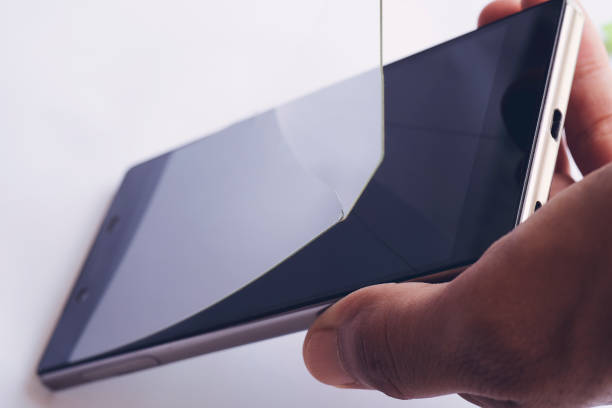
Privacy screen protectors function by controlling the directional transmission of light rather than altering on-screen content. This creates a visibility system where front-facing clarity is preserved while off-angle readability is selectively reduced, forming the foundation for angle-based visual protection mechanisms.
The core of privacy protection is micro-louver structure, which consists of microscopic vertical elements embedded within the material. These structures function like optical channels that guide light in a controlled direction.
Incoming light is filtered through these vertical micro-structures, allowing only specific viewing angles to pass through clearly. As a result, off-angle light transmission is significantly reduced while direct viewing remains stable.
The main function of privacy screen protectors is based on angle-dependent visibility control. The display remains fully readable when viewed from the front, where light transmission is optimized.
However, when the viewing angle shifts beyond a certain threshold, light diffusion is restricted, causing the screen content to darken or become unreadable. This effect does not rely on opacity but on controlled light directionality.
This creates a dual-visibility system where clarity is maintained for the user while readability is reduced for side viewers.
Privacy screen protectors are produced in different formats to match device structure and usage requirements.
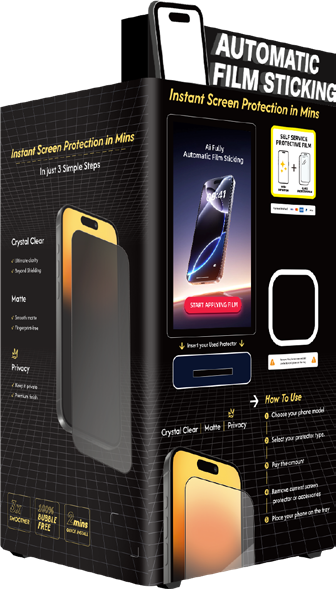
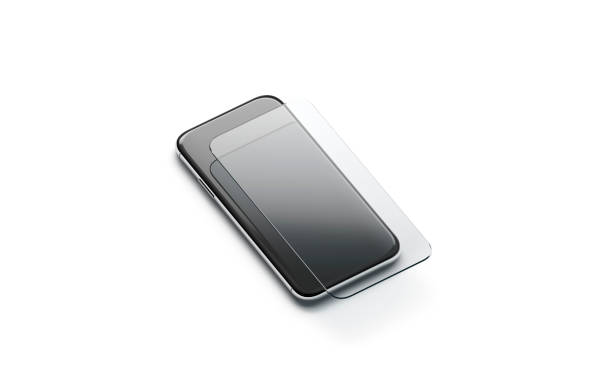
Privacy screen protector usage is distributed across different device interaction contexts where screen exposure conditions vary significantly. These differences are shaped by how devices are used across professional, mobile, and multi-device environments, forming distinct application scenarios within the broader usage ecosystem.
Industries such as finance, healthcare, and legal services frequently handle sensitive digital information in environments where screen visibility can affect operational security.
Remote and hybrid work further extends this exposure outside controlled office settings, as work-related tasks are increasingly completed in shared or semi-public spaces.
Privacy-oriented screen usage becomes part of standard digital work infrastructure.
Device-based usage patterns vary depending on device type and usage intensity.
| Device Type | Usage Pattern | Exposure Level |
|---|---|---|
| Smartphones | High-frequency short interactions | High exposure in public spaces |
| Laptops | Extended work sessions | Medium exposure in shared environments |
| Tablets | Mixed media + work usage | Variable exposure depending on context |
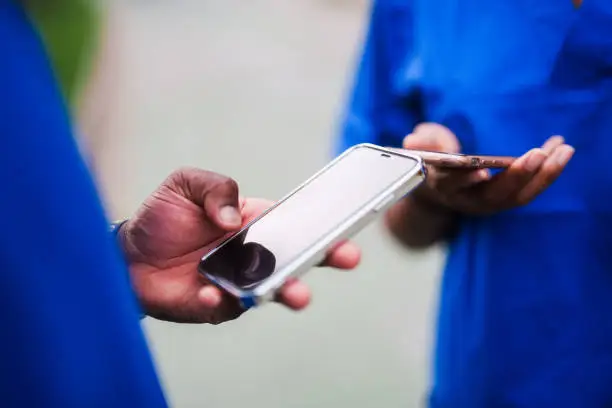
Purchase decisions are often triggered when users become aware that their screens are visible to others in real-world situations, especially in crowded or high-proximity environments.
Purchase decisions are often activated by sudden awareness of personal screen sensitivity in real-world situations. These triggers typically occur in crowded or high-proximity environments, where users experience immediate perception of personal information vulnerability.
Moments such as sitting in close seating arrangements or using devices in public queues create instant perception of vulnerability, which can directly influence the decision to seek privacy protection.
These triggers are situational and time-sensitive, driven by immediate environmental awareness rather than planned intention.
BYOD (Bring Your Own Device) policies introduce structured expectations for device security beyond organizational environments. This extends privacy concerns beyond personal preference into organizational standards.
Industries with higher sensitivity to data protection, such as finance, healthcare, and legal services, often reinforce awareness of information security even when devices are used outside formal office environments.
Privacy protection becomes aligned with institutional compliance requirements rather than individual preference.
Ease of use plays a critical role in shaping adoption behavior for privacy screen protectors as a product category. Easy installation and removal reduces friction in adoption.
Portability across multiple devices further increases practical value, especially for users who switch between smartphones, tablets, or laptops throughout the day.
In addition, a low-friction replacement cycle supports repeated usage behavior, where products can be quickly replaced when damaged or worn without complex decision processes.
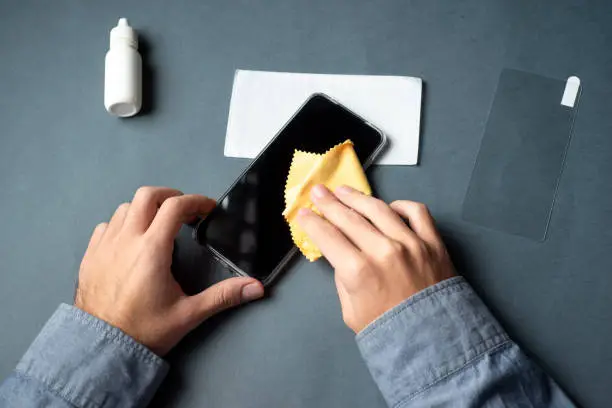
Pricing and product strategy in retail channels are shaped by how material cost structures translate into perceived value across different product tiers. This creates a layered commercial system where pricing decisions directly influence margin distribution and overall retail performance efficiency.
Pricing in retail environments is typically structured into a tiered model, where film-based products are positioned as entry-level options due to their lower production cost and flexible application.
In contrast, tempered glass privacy protectors are positioned in the premium tier, supported by stronger perceived durability and higher product rigidity, which increases perceived value.
This separation allows operators to align pricing with perceived performance differences, creating clear segmentation between budget-oriented and premium offerings within the same product category.
Profit margins are directly influenced by differences in material cost structure between film-based and glass-based products.
Film materials generally offer lower unit cost, which supports higher margin flexibility at scale, especially in high-volume retail environments.
Tempered glass products, while higher in cost, support higher absolute pricing levels, which helps maintain stable margin ratios in premium positioning strategies.
This dual-structure enables margin optimization across price segments.
Retail conversion performance is strongly influenced by packaging visibility and product presentation, which directly affect first-impression decision-making in physical environments.
Low entry price points reduce cognitive friction, making it easier for users to make instant purchase decisions without extended comparison.
In addition, retail environments amplify spontaneous buying behavior, where limited decision time and visible product placement increase conversion probability at the point of sale.
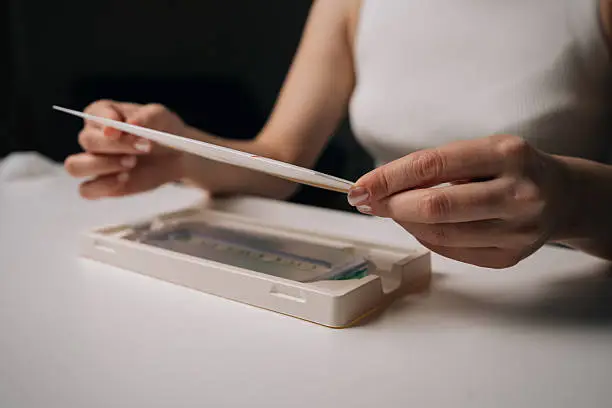
Buyer education and conversion processes rely on transforming abstract privacy risks into immediately observable scenarios within real-world environments. This reduces cognitive distance between awareness and action, allowing users to understand both the problem and the relevance of the solution in a single perceptual step.
Effective conversion begins with direct visual proof that shows how screen visibility changes across different viewing angles. Side-by-side comparisons in real-world lighting conditions make the privacy effect immediately understandable without requiring technical explanation.
In practice, demonstration setups often replicate public environments such as cafés or transit-like lighting conditions to simulate real exposure. This helps users perceive the difference between protected and unprotected screens within seconds.
The goal is to achieve instant recognition of privacy protection through visual demonstration rather than explanation.
Technical communication should focus on functional clarity rather than optical engineering details. Micro-louver structures can be explained as directional light control layers that selectively limit side visibility while maintaining front-facing clarity.
Instead of describing internal mechanisms in depth, the emphasis is placed on user-facing outcomes. This reduces cognitive load and accelerates understanding of product value.
Clear, simplified messaging ensures users can connect function to perceived benefit without interpretation barriers.
Trust is reinforced by linking privacy protection with additional functional benefits that users can immediately recognize. Anti-glare performance improves visibility in bright environments, while blue light reduction supports longer screen usage with reduced eye strain.
Scratch resistance adds a physical durability layer that protects the underlying device glass during daily handling. These secondary functional benefits reinforce overall product value without shifting focus away from the core privacy function.
Together, these benefits reinforce trust and increase adoption willingness.
Data security drives the demand, especially in public spaces. Surveys indicate 70% of users actively worry about unauthorized access to their personal data. Stricter data protection regulations also force businesses to secure confidential client data against visual hacking.
Yes. Consumers often purchase them after noticing that their screen is visible to nearby people in public settings. Budget-friendly price points under $20 and easy retail availability fuel these quick buying decisions. The sudden fear of visual hacking while doing public mobile banking or remote work pushes users to buy fast, often skipping prior research entirely.
You place vending machines in locations where mobile device usage is frequent and fast purchasing decisions are common. Clear packaging is essential to visually demonstrate the side-angle blocking effect. Operators need to stock sizes for the most popular smartphones and run quick-install video demos on the machine's digital display. Pricing the units between $10 and $25 effectively captures the impulse buyer market.
Privacy screen protectors reflect a broader shift toward public digital exposure awareness, where screen visibility in shared environments has become a practical concern rather than an edge case. As digital activity continues to expand across transit, work, and social spaces, privacy protection is increasingly embedded into everyday device usage as a functional layer rather than an optional upgrade.
For businesses in this space, aligning product selection with privacy-driven demand helps stabilize retail performance. GOBEAR’s screen protector machine systems enable automated, 24/7 revenue generation across high-traffic locations.
Share your business vision with us. Our automated retail experts will craft a tailored strategy and a comprehensive profitability report to unlock your next revenue stream.