How to Start A Phone Case Vending Machine Business - GOBEAR
Start a phone case vending machine business with low costs, high profits, and tips on setup, legal steps, and choosing t...

I'm the COO of GOBEAR. We help entrepreneurs, mall operators, 3C mobile stores, event venues, and campus retailers tap into high-margin, low-maintenance vending models.
Singapore’s retail sector is currently seeing a significant shift toward automated vending machines to address the twin challenges of high rent and labor shortages. For entrepreneurs, an automated phone case vending machine is a practical way to run a high-margin production unit within a very small footprint. This 2026 guide covers the essential steps and local requirements for starting your business.
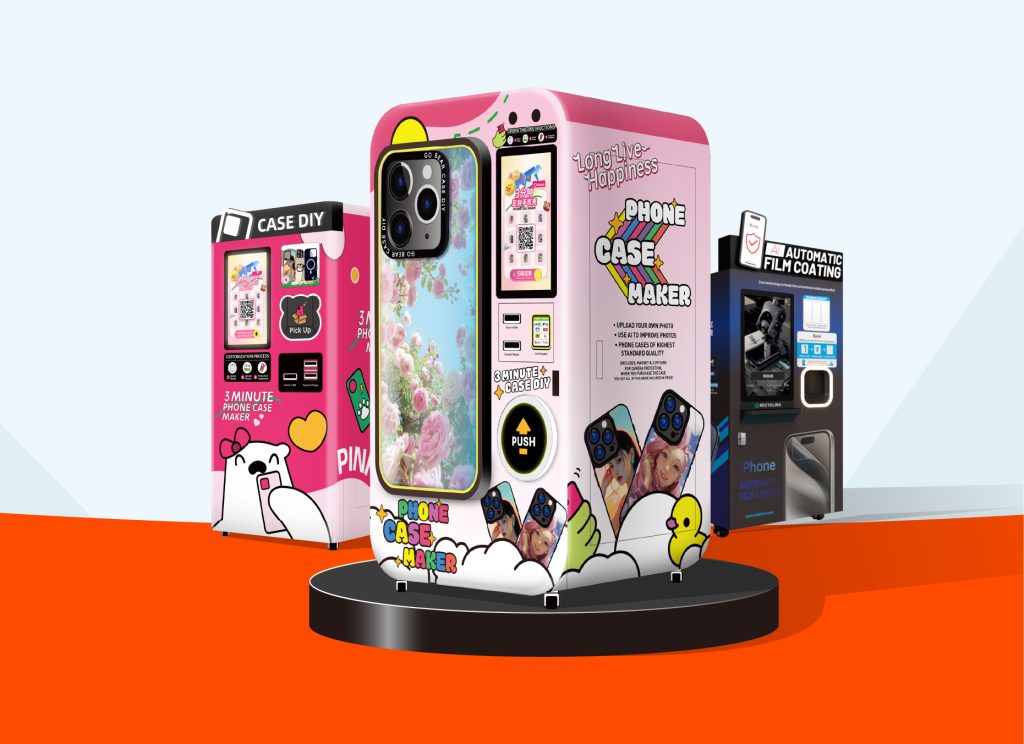
Singapore is an ideal environment for this specific niche because high operational costs and a tech-savvy population create the perfect conditions for automated, on-demand accessory retail.
Managing Rising Costs: With the steady increase in the Progressive Wage Model (PWM) and strict foreign worker quotas, the cost of hiring retail staff for a phone accessory booth is a major burden. Automation effectively eliminates the expenses associated with shift work, CPF contributions, and staff management.
Government Support for Automation: Agencies like IMDA and Enterprise Singapore provide specific support for unmanned retail projects. The Productivity Solutions Grant (PSG) is a key resource, potentially covering 50% to 80% of the technology investment for eligible local Small and Medium Enterprises (SMEs).
Eliminating Inventory Risk: Unlike traditional retail, where you must guess which case designs will be popular, on-demand printing allows you to offer thousands of designs without the risk of overstocking. You only print a case once a customer has paid for it.
Sustainability Alignment: Producing cases only when they are ordered significantly reduces plastic waste from unsold, obsolete stock. This aligns with the Singapore Green Plan 2030, making your business more attractive to mall landlords who prioritize Environmental, Social, and Governance (ESG) targets.
Setting up your legal and regulatory foundation in Singapore is a systematic process. You need to ensure your business entity and your equipment meet local standards.
Registering your company with the Accounting and Corporate Regulatory Authority (ACRA) is the first requirement. While a Sole Proprietorship is an option for S$115, incorporating as a Private Limited (Pte Ltd) company is generally preferred. This structure protects your personal assets and is usually a requirement for securing mall leases or government grants.
One of the practical benefits of selling phone cases is that they are non-perishable. You can bypass the Singapore Food Agency (SFA) entirely. This means you avoid food-handler courses, regular hygiene inspections, and the strict temperature controls required for food and beverage vending machines.
Singaporean malls have strict fire safety and electrical requirements. Your vending machine must carry the Enterprise Singapore Safety Mark. In most cases, you will also need to engage a Licensed Electrical Worker (LEW) to certify that the machine’s power connection is safe before you are allowed to begin operations.
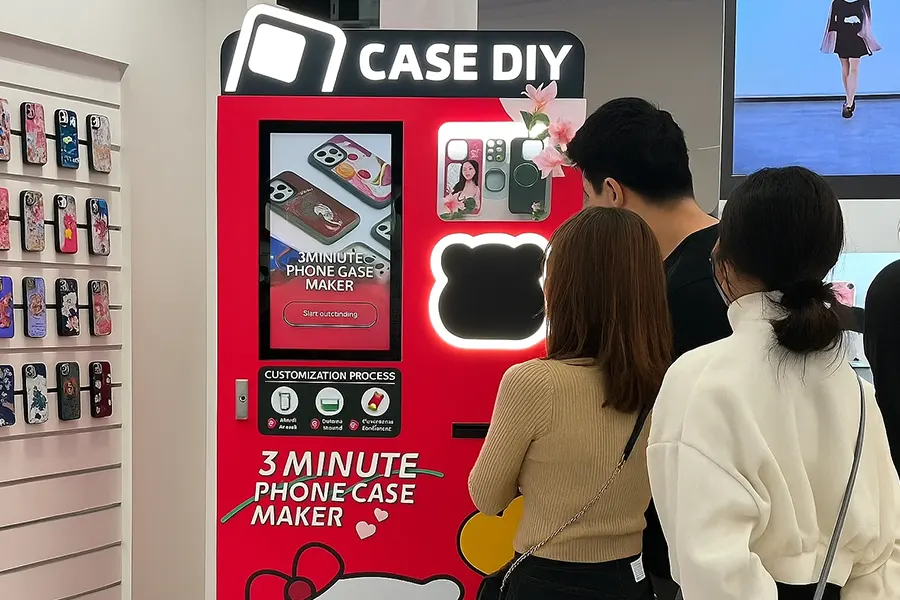
The most effective locations for these vending machines are areas where people spend a significant amount of dwell time—the period they are waiting or idling with their phones in hand.
Wait-Heavy Locations: Cinema lobbies, hospital waiting areas, and large transit interchanges like Jurong East or Serangoon are excellent choices. When people are waiting for an appointment or a train, they are much more likely to interact with a customization screen to pass the time.
Student and Tourist Corridors: Students at polytechnics and universities update their phone accessories frequently. Meanwhile, locations like Jewel Changi or Marina Bay Sands offer the chance to sell personalized Singapore Edition cases to tourists looking for immediate souvenirs.
The Benefit of Mobility: Unlike a traditional shop with a long-term fixed lease, a vending machine is mobile. If a location is not meeting your revenue targets after three months, you can relocate the machine to a different mall for a moving fee between S$200 and S$400.
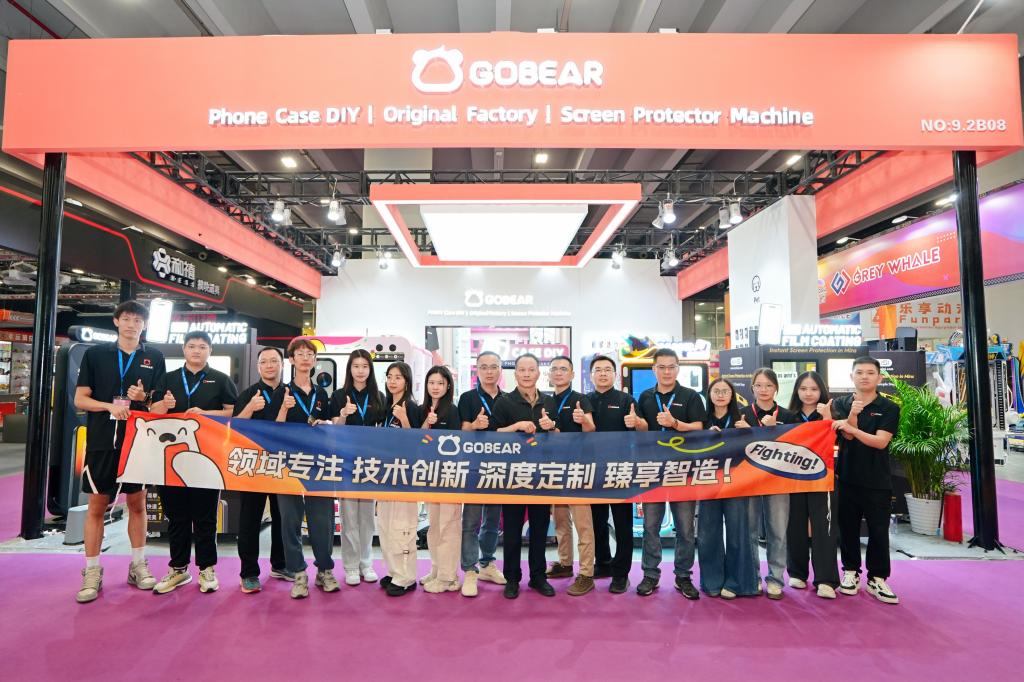
A successful launch requires budgeting for the equipment as well as the initial administrative and rental fees. All startup costs are in Singapore Dollars.
| Expense Category | Estimated Cost | Details |
|---|---|---|
| High-End UV Printer Machine | S$6,000–S$9,500 | Professional UV printing and AI software. |
| Initial Inventory | S$1,200–S$2,000 | Bulk TPU blanks and high-capacity ink. |
| Mall Security Deposit | S$1,500–S$4,500 | Typically one to three months of rent. |
| Electrical Tapping & LEW | S$500–S$1,200 | One-time technical endorsement and safety fee. |
| Public Liability Insurance | S$500–S$1,000 | Annual coverage required by mall landlords. |
Total Estimated Initial Capital: S$10,500–S$19,000. Note that your net investment may be lower if you qualify for government grants that reimburse a portion of the equipment cost.
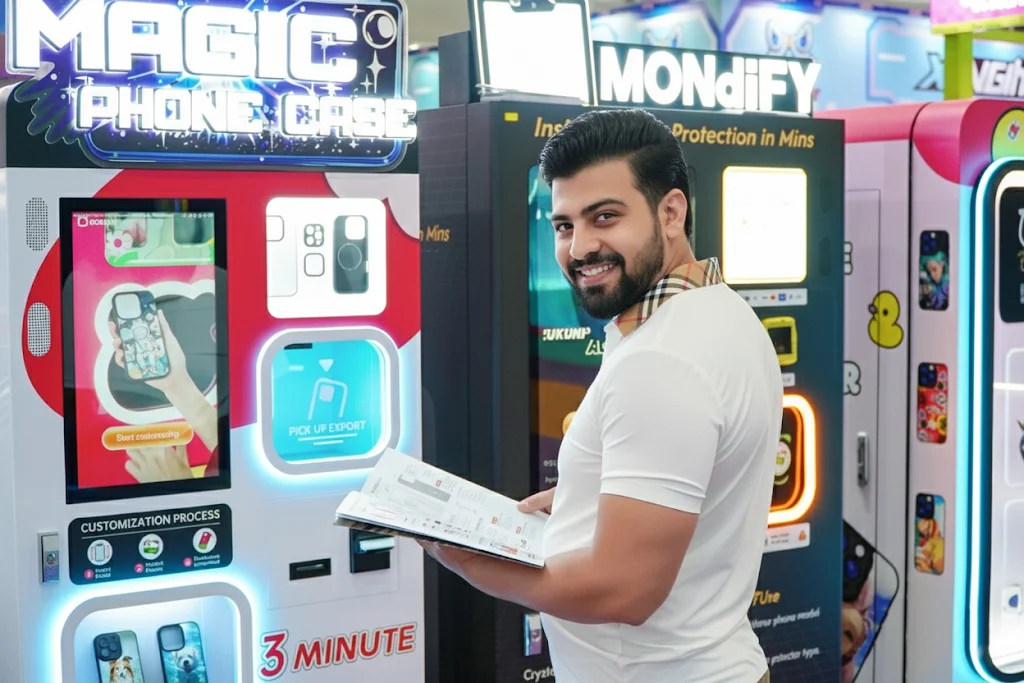
When choosing a vending machine, you must prioritize features that help you comply with Singaporean laws and meet the high expectations of local landlords and consumers.
Mandatory PDPA Compliance: Singapore has strict data privacy laws under the Personal Data Protection Act (PDPA). Your machine must be programmed to automatically and permanently delete all user-uploaded photos from its local memory the moment the print is finished to ensure customer trust and legal compliance.
Landlord-Friendly ESG Features: Grade-A malls often prioritize tenants who support the Singapore Green Plan 2030. Selecting a vending machine that is compatible with biodegradable TPU blanks gives you a competitive advantage when negotiating for prime locations in eco-conscious developments.
Industrial-Grade UV Output: Singaporean consumers are quality-conscious. To command a premium price, your machine needs 2880 Dots Per Inch (DPI) print nozzles and UV-cured ink. This ensures the cases are scratch-resistant, odorless, and dry immediately—essential for a high-traffic retail environment.
Remote Operations for Efficient Management: Given the high value of time in Singapore, your machine should feature cloud-based telemetry. This allows you to monitor sales, inventory, and technical health from your smartphone, reducing the need for physical site visits to once a week for restocking and basic cleaning.
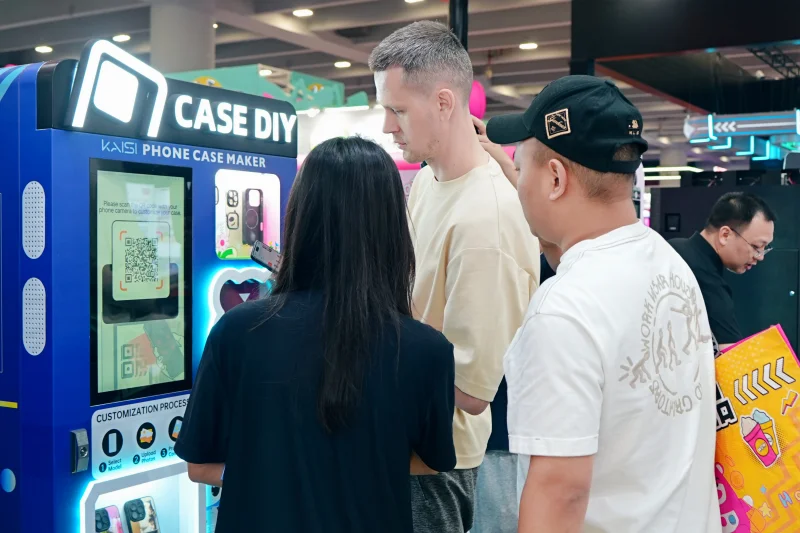
The financial framework of an on-demand printing business is exceptionally strong because the value proposition is based on personalization rather than the volume of raw materials.
The earning potential of this model relies on the substantial gap between the sourcing cost of raw materials and the retail price of a finished, personalized product. Because the customer provides the design, the business captures a significant creativity premium with very low variable costs.
Production Cost Structure per Unit:
Premium Blank Case: S$1.50–S$3.00 depending on model and material.
High-Capacity UV Ink: S$0.20–S$0.30 per full-color print.
Electricity per Job: S$0.05–S$0.10.
Total Variable Cost: S$1.75–S$3.40 per case.
With retail prices in Singapore typically set between S$25 and S$45, the gross profit per unit ranges from S$21 to S$43, maintaining a margin of over 85%.
While a phone case vending machine is a powerful standalone unit, placing a screen protector vending machine directly beside it significantly increases the total transaction value. This strategy capitalizes on the customer's mindset of wanting a complete solution for their new device. By offering both essential accessories in one location, you not only improve customer convenience but also drive higher combined revenue for both machines.
The Return on Investment (ROI) for automated retail is far faster than traditional storefronts due to the lack of onsite labor costs and lower square-footage rental fees. In high-traffic locations such as VivoCity or Suntec City, a well-managed machine can achieve a full payback of its initial startup capital within three to four months. This rapid recovery of investment allows operators to scale their business by reinvesting profits into additional machines across different mall locations quickly.
Success requires staying active in managing your vending machine and your inventory. Most business failures in this sector are due to operational neglect.
Avoiding Obsolete Inventory: Mobile phone models change quickly. Do not spend your capital on cases for older phones that no longer have a market. Focus your inventory on the latest three generations of flagship models from Apple, Samsung, and Google.
Connectivity and Payment Reliability: Singapore is a cashless society. If your vending machine cannot process PayNow or credit card payments due to a poor internet connection, you will lose almost all potential sales. Use a dedicated industrial 4G or 5G router to ensure stable transactions.
Service Level Agreements: If your printer is out of service, you are not making money. Ensure your equipment supplier provides a Service Level Agreement (SLA) of 24 to 48 hours for on-site repairs to keep your downtime to a minimum.
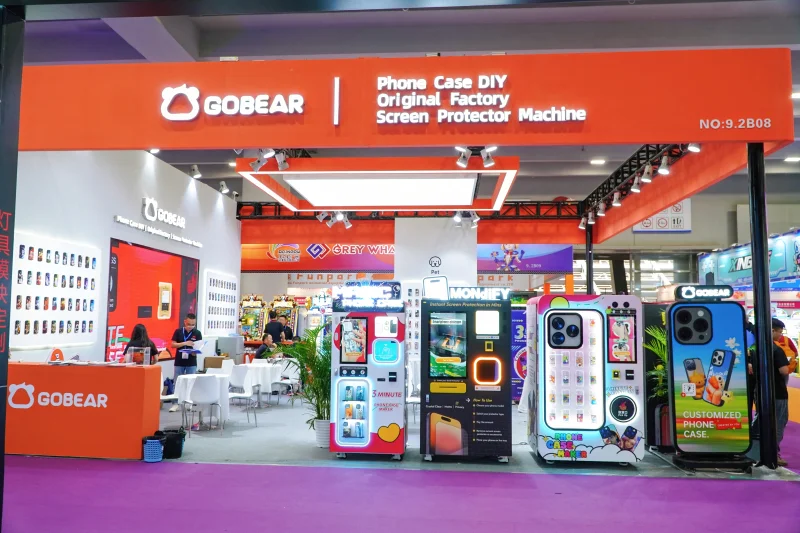
Success in automated retail depends on a balance of strategic placement and high-performance hardware. To help you navigate these challenges, Gobear provides the advanced technology and local backend systems you need to maintain a reliable operation without technical complexity.
Our phone case vending machines are built for the fast-paced retail environment of Singapore, producing a high-resolution, professional-grade case in exactly 120 seconds. Our software is designed to be fully PDPA compliant, ensuring that your customers' data is handled securely. With our local technical team and a mobile-friendly cloud dashboard, you can monitor and manage your entire business from anywhere. Partner with us today to start your successful phone case vending machine business in Singapore.
No. Since you are not selling food or beverages, a National Environment Agency (NEA) or SFA license is not required. A standard ACRA registration and a valid agreement with the venue owner are the primary requirements to begin operations.
Landlords typically offer flexible 6 to 12-month terms. You will usually encounter either a fixed monthly fee or a "Base Rent plus % of Sales" model. This allows you to secure prime locations with significantly lower overhead than a traditional retail shop.
Cashless integration is vital. PayNow is a priority for the Singapore market, followed by contactless credit cards and mobile wallets like Apple Pay. Modern mall shoppers rarely use cash, so a reliable digital payment system is essential for sales.
The business is designed for high efficiency. Most operators spend only 2 to 3 hours a week per machine on restocking and basic cleaning. Because the machine automates both the sales and production processes, it is a highly manageable venture for busy entrepreneurs.
Aside from rent, your main expenses are electricity (S$40–S$70), a small data plan for payments, and public liability insurance. Without the burden of staff salaries or CPF contributions, your monthly operational costs remain lean and predictable.
Tell us about your business goals, and our experts will provide a tailored solution and a detailed profitability report. Let's start building your new revenue stream together.