Why Vending Machines are the Future of Phone Accessories Retail
Discover why automated retail is the future of the phone accessories market. Learn how AI-driven vending machines cut la...

I'm the COO of GOBEAR. We help entrepreneurs, mall operators, 3C mobile stores, event venues, and campus retailers tap into high-margin, low-maintenance vending models.
Finding a list of potential spots is easy; verifying which one will actually generate profit is the hard part. While you might know that malls and universities are the top profitable vending machine locations, few operators know how to vet a specific spot before committing cash.
This guide focuses on the methodology of site selection. We will move beyond basic headcount and analyze buyer behavior, calculate realistic returns, and identify the hidden risks that ruin a location's profitability.
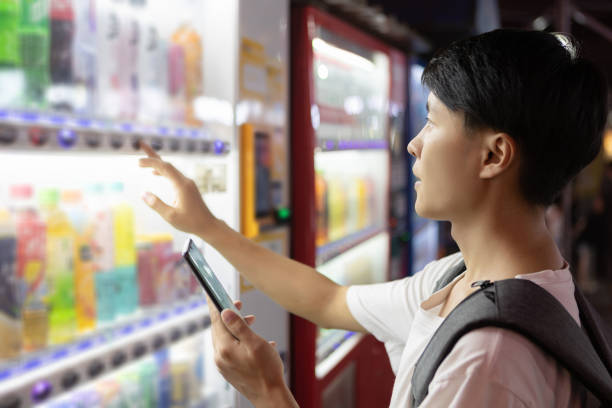
Traffic volume is deceptive. A hallway with 1,000 rushing commuters might yield fewer sales than a waiting room with 50 bored visitors. You need to analyze the quality of that traffic.
Think of dwell time as "browsing time." It is the single most critical factor for high-value vending, such as phone cases or electronics.
The "Pass-Through" Problem: Corridors and subway turnstiles are for movement, not shopping. People here are in a rush. These spots only work for instant need,s such as water or umbrellas.
The "Captive" Advantage: Break rooms, laundromats, and airport gates force people to wait. Extended wait times drive engagement. These are the ideal locations for custom vending machines. Customers here have the time to stop and browse. They are more likely to interact with a touchscreen and personalize a product.
Traffic counts don't matter if the people passing by aren't your customers.
Avoid Mismatches: A retirement home might have steady foot traffic, but residents there are unlikely to buy custom pop-culture phone accessories.
Focus on Purchasing Power: A university library matches the demographic of young, tech-savvy students perfectly. Always ask: "Does the person walking by actually want what I'm selling?"
The best locations trigger an emotional response. People buy when they are stressed, bored, or in a panic.
The "Panic" Buy: Consider a traveler at an airport who just dropped their phone. They aren't price-shopping. They are solving an immediate emergency.
The "Reward" Buy: An office worker stepping out of a grueling three-hour meeting feels they deserve a treat.
Strategy: Position your machine where these feelings occur. If there is no emotional trigger, you are relying 100% on visibility.
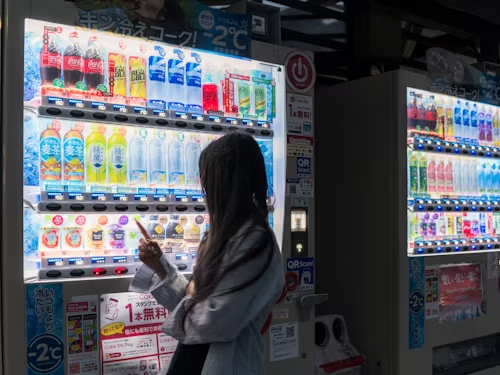
Spreadsheets are great, but field data is better. Here is a simple way to forecast revenue without expensive tools.
Don't trust the landlord's numbers. Go to the site yourself. Stand there for 20 minutes during the morning rush, lunch hour, and mid-afternoon slump. Count exactly how many people walk within 10 feet of the proposed spot. Multiply that 20-minute count by 3 to get your real hourly baseline.
Multiply your average hourly count by the location's active hours. Be realistic here. A gym might be open 24/7, but if it is empty from midnight to 6 AM, those hours don't count.
Now, apply a conservative estimate. For low-cost impulse items such as snacks, you might see a 1% to 3% conversion rate. For high-ticket items such as electronics, it is safer to plan for a lower rate, perhaps 0.2% to 0.5%. It is always better to underestimate revenue and be pleasantly surprised than to overpromise and fail.
Multiply your predicted sales by your Average Transaction Value (ATV). If you sell premium custom items, such as a DIY phone case printing machine, you don't need a high volume of customers to make money. Just two or three sales a day can out-earn a soda machine. A traditional snack machine often needs 50 transactions to hit the same revenue. This is why high-margin vending is the smarter play for locations with moderate but high-quality traffic.
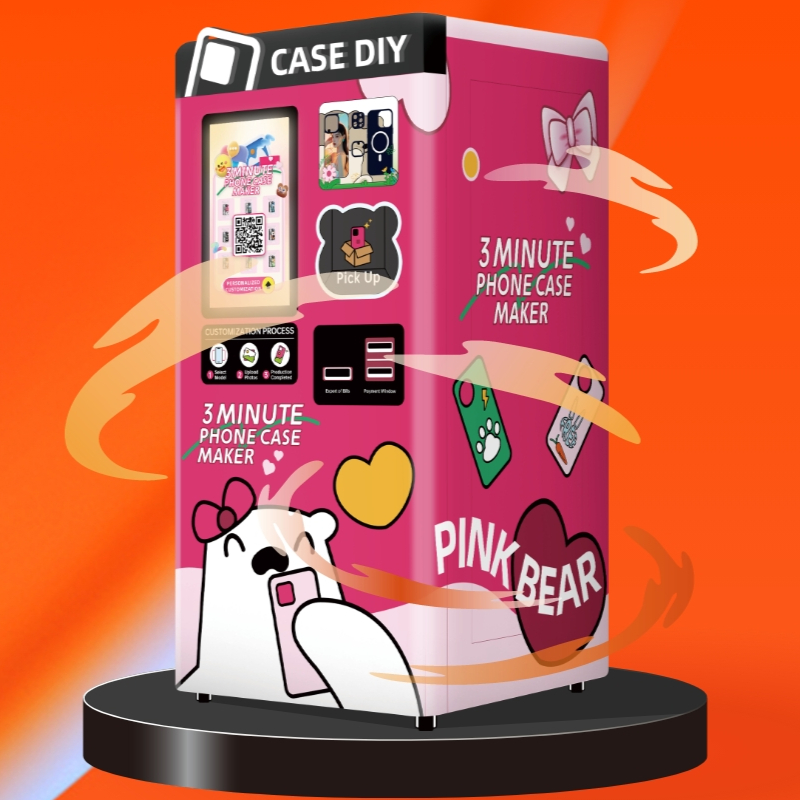
A location can look perfect on paper and still be a financial disaster. Before you sign, walk the floor and look for these specific operational risks.
Digital machines are sensitive. Direct sunlight causes glare. Worse, it can overheat internal components or cure UV ink inside printers, leading to expensive repairs. Likewise, an uninsulated vestibule that freezes in winter will damage your hardware. Rule of thumb: If the environment is uncomfortable for a person to stand in for an hour, it is unsuitable for your machine.
Your biggest competitor isn't always another vending machine. It is any business that solves the same problem for your customer.
Check for Direct Substitutes: If you sell snacks, a nearby 7-Eleven is a threat. But if you sell phone accessories, look for mobile repair shops or mall kiosks. A customer won't buy a screen protector from your machine if a person 20 feet away offers to install a better one for the same price.
The "Free" Problem: Never place a machine next to a subsidized competitor. For example, do not place a coffee machine in an office that provides free coffee to employees. You cannot compete with "free."
Assess the site's physical requirements to ensure a smooth installation.
The Doorway Test: Measure every door frame and elevator on the path to the spot. There is nothing worse than paying for shipping only to find your machine is one inch too wide to fit into the room.
Signal Blocking (The Faraday Cage Effect): Basements, elevators, and thick concrete walls block cell signals. Modern card readers need a stable connection to process payments. Test your phone signal at the exact spot. If you have no bars, your machine cannot process transactions.
Power Access: Extension cords are a tripping hazard and a fire code violation. Ensure there is a grounded outlet within six feet.
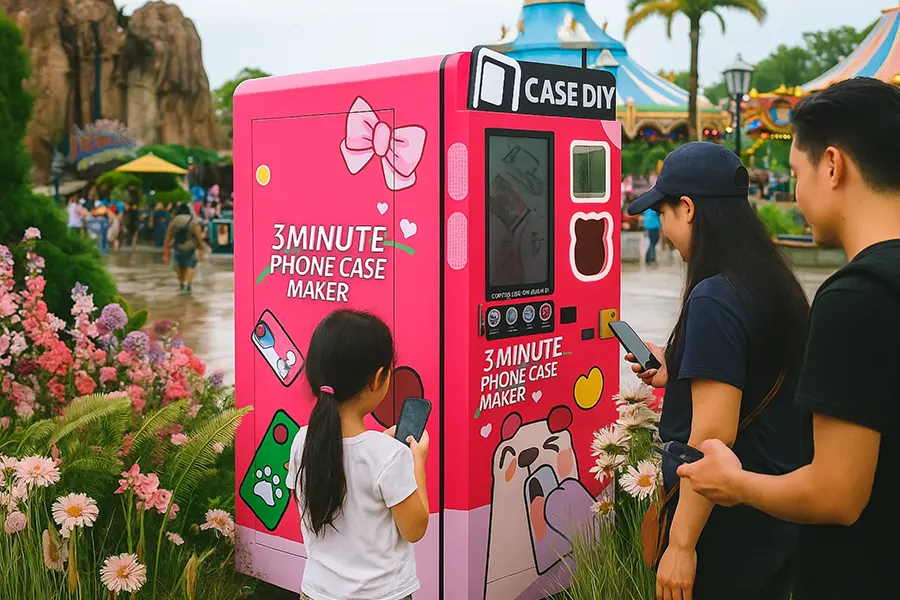
If you are negotiating a high-stakes contract, you need more than a manual count. Use professional data to back up your decision.
For premium locations like malls, ask the property manager for their traffic reports. Enterprise-grade tools such as Placer.ai or Buxton track mobile phone movement. These reports reveal not just traffic volume, but also who those people are, including their income level and shopping habits. Use the landlord's data to verify if their "high traffic" claims actually align with your target customer.
Save yourself a trip. Search for the venue on Google Maps and look at the "Popular Times" graph. It gives you a historical breakdown of foot traffic by hour and day. If the graph shows the location is completely empty on Tuesdays and Wednesdays, you know your revenue will be inconsistent.
Want to know if people are actually interested? Run a test before you buy. Ask the owner if you can place a "Coming Soon" sign with a QR code in the spot for a week. Link it to a voting poll for products. If nobody scans it, nobody is looking at that spot. If you get scans, you have proof of demand.
In massive venues like airports, the main hallway isn't always the best spot. Ask for a Wi-Fi heatmap from the IT department. You might find that people linger longer in a quiet side corridor near charging stations. That "quiet" spot is often better for sales than the busy main entrance where everyone is rushing.
Quality beats quantity. A hallway with 300 rushing commuters might yield zero sales, while a waiting room with 40 bored visitors can be a goldmine. Don't just count heads; look for dwell time. You need people who have the time to stop and look.
For premium spots like malls, expect to pay 10% to 25% of gross sales. But for private offices? Try pitching your machine as a "free employee perk" first. You’d be surprised how often you can pay 0% commission just by solving their refreshment problem.
Look for "captive audiences." Hospitals, universities, and factories are classics because people there have few other options. However, for high-ticket items (like electronics), malls and airports are often superior because visitors are already in a spending mindset.
Never rely on a handshake. You need a signed Location Agreement to protect your equipment and define terms. Also, verify your local business license and sales tax requirements before installing. The paperwork can be tricky, so it’s worth getting it right from day one.
Traditional snack machines often take 12 to 18 months to pay back the investment. However, high-margin specialty machines (like custom printing) can break even in just 3 to 6 months. Fewer sales, higher profits, faster ROI.
Profitable locations aren't found by guessing; they are found by calculating. Ignore superficial metrics and focus on what matters: dwell time, emotional triggers, and real competition. This turns site selection from a gamble into a science.
Gobear helps you maximize the value of every square foot. Our DIY phone case printing machines and screen protector vending machines command a much higher transaction value than traditional vending, allowing you to generate significant profit even in locations with moderate foot traffic. We provide the industrial Epson hardware and evaluation support you need to succeed. Partner with us today to launch a high-margin business with zero franchise fees.
Tell us about your business goals, and our experts will provide a tailored solution and a detailed profitability report. Let's start building your new revenue stream together.